TL;DR: The succession crisis in Polish companies stems from a lack of communication between generations. As many as 85% of successors don’t want to take over companies, which requires a change in management strategy.
The greenhouse effect: Will second-generation companies survive outside the local network?
In many Polish towns and cities with up to 100,000 residents, whose economies rely on family businesses founded after 1989, a moment of truth is approaching – the first generational shift in history. Some of these businesses owe their success to close relations with local government and steady access to public contracts. This raises a fundamental question: will the potential failure of successors who take the helm be the result of their individual shortcomings, or an inevitable consequence of growing up in “greenhouse” conditions that didn’t prepare them to face a tough market?
Economic anatomical profile of a medium-sized city
The economy of a typical medium-sized city is based on small and medium-sized enterprises (SMEs), many of which are family-run. While this testifies to local resourcefulness, it is also a source of systemic weakness. A key challenge diagnosed in development strategies is demographics, specifically the “burning problem” of young, educated people draining away to major agglomerations. This brain drain creates a vicious circle: the city loses human capital, and if local family businesses prove unstable due to failed succession, they will lose key jobs, which will only accelerate emigration.
Public contract: Engine of development or trap of dependency?
Public procurement, commissioned by city halls or road authorities, constitutes a significant driver of the local economy. Construction and service contracts dominate, often long-term in nature, which fosters the building of lasting relationships between local government and contractors.
The problem arises when these relationships become too close. This phenomenon, referred to in administrative sciences as “particularism,” consists in favoring a specific group in access to public goods. Even if this takes place within the bounds of the law, it undermines the principles of fair competition. Companies whose business model relies mainly on public contracts operate on a different logic than those from the open market. Success here depends on knowing procedures and relationships with officials, rather than marketing, innovation, and aggressive sales.
A business optimized for the former model falls into a “dependency trap.” It succeeds in its protected, local niche, but becomes fragile in the face of changes in the external market or the local political landscape. This is the very essence of the “greenhouse effect.”
Nationwide succession crisis
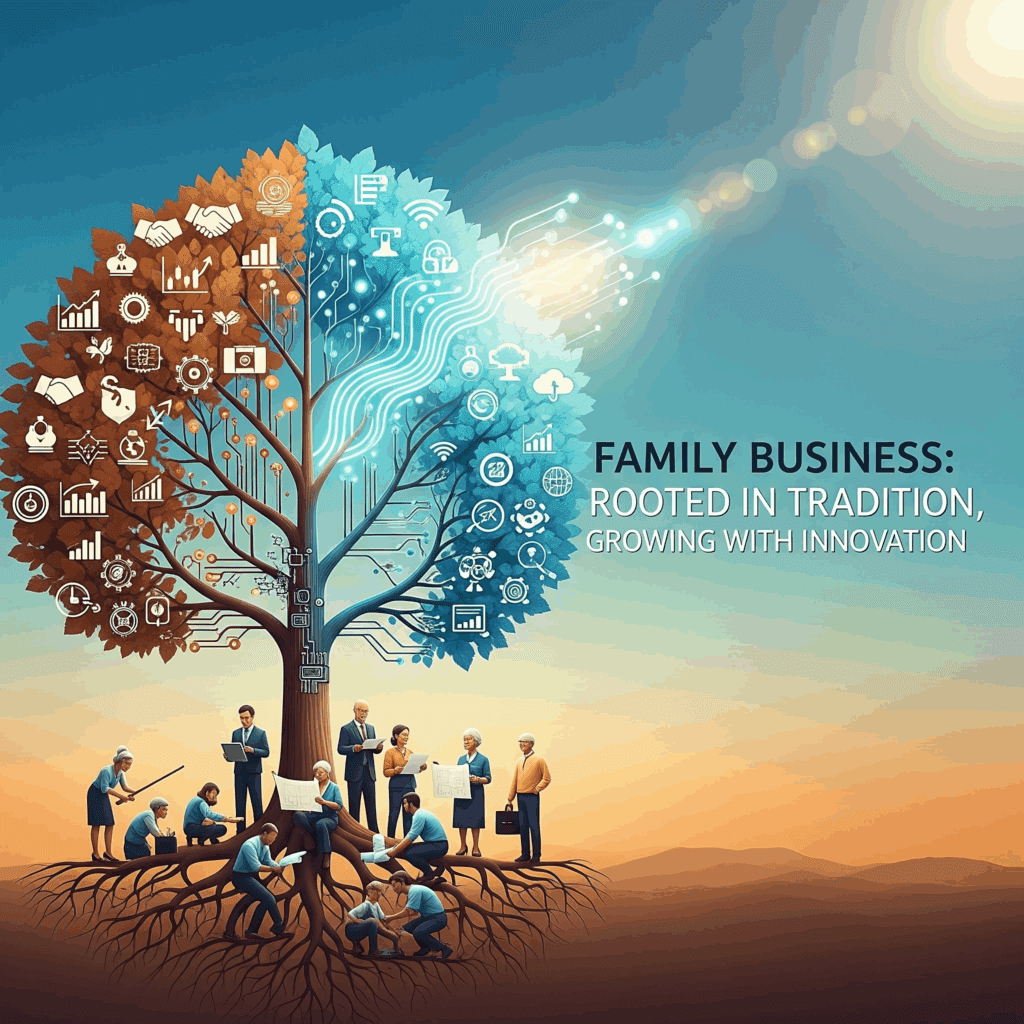
The situation in medium-sized cities is a microcosm of a nationwide phenomenon. Most Polish family businesses were founded after the transformation, and their founders are approaching retirement age. The statistics are alarming: only 30% of family businesses survive the transfer to the second generation.
Research points to a deep gap in expectations: 80% of founders want to hand the company over to their children, but as many as 85% of potential successors do not want to take over responsibility for running it. This conflict of wills is compounded by a lack of trust – 60% of founders believe their children lack sufficient competence. This distrust leads to postponing the moment of power transfer, which hinders the successor’s professional development and creates a vicious circle.
Systemic fault, not individual failure
In this context, answering the question “is it these kids’ fault?” becomes more complex. It’s not a matter of moral failure, but the predictable result of the environment in which they grew up. Every rational actor adapts to their surroundings. If success in a given ecosystem is tied to informal networks, those are precisely the skills that get developed. Young people are not motivated to acquire the competencies needed on the open market because they are not rewarded in their environment. Responsibility rests not with the individual, but with the ecosystem that shaped them.
The consequences for the city are serious: erosion of the tax base, stifled innovation due to barriers to entry for new companies, reputational damage, and an acceleration of demographic “hollowing out.”
A plan for a resilient local economy
Moving from diagnosis to solutions requires action on two fronts.
For public institutions: The key is building an infrastructure of trust and competition. Local governments should strive for radical transparency by creating public, interactive online dashboards that track all bids and evaluation criteria in tenders. It is also worth considering the appointment of independent, local economic integrity commissions to monitor the market for unhealthy concentration and provide a channel for whistleblowers.
For business families: Professionalization and conscious shaping of the successor are essential. Companies should adopt formal corporate governance rules, e.g., in the form of a “Family Business Constitution.” However, the key “vaccine” against the greenhouse effect is the requirement that every potential successor work for 3-5 years in another company, in another city, before taking on a management position. Such an “external trial” allows them to gain invaluable market experience, build independent self-confidence, and learn other organizational cultures.
Cultivating dynamism instead of dependency
The long-term prosperity of medium-sized cities depends on proactively shaping an ecosystem that values meritocracy and genuine competition. The challenge is not about assigning blame to individuals, but about neutralizing systemic risk. Through conscious institutional reforms and strategic foresight within business families, the “greenhouse effect” can be mitigated, allowing for the creation of resilient, multi-generational enterprises that will serve as a lasting anchor for the local economy.
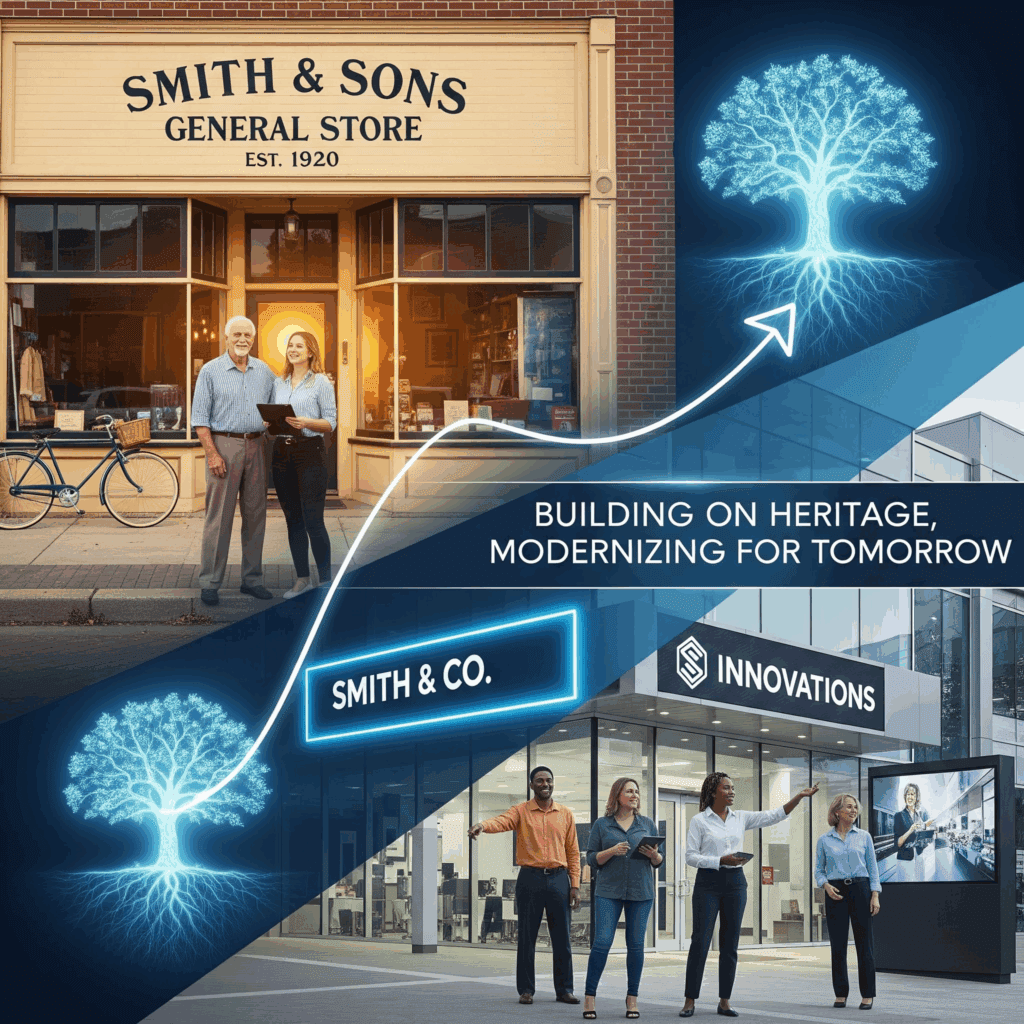
If you have to take over the business from your parents, this is the right time for us to talk.
I will help you prepare for the stable growth of your business. Let’s talk 🙂
FAQ – Business Succession
Why don’t children want to take over their parents’ businesses? This often stems from a lack of a modern vision for company development and the fear of overwhelming responsibility.


![[eBook] Marketing 360 — From Fundamentals to Advanced Strategy by Mariusz Brandt](https://mariuszbrandt.pl/wp-content/uploads/2025/04/okladka_Marketing360_MariuszBrandt.jpg)