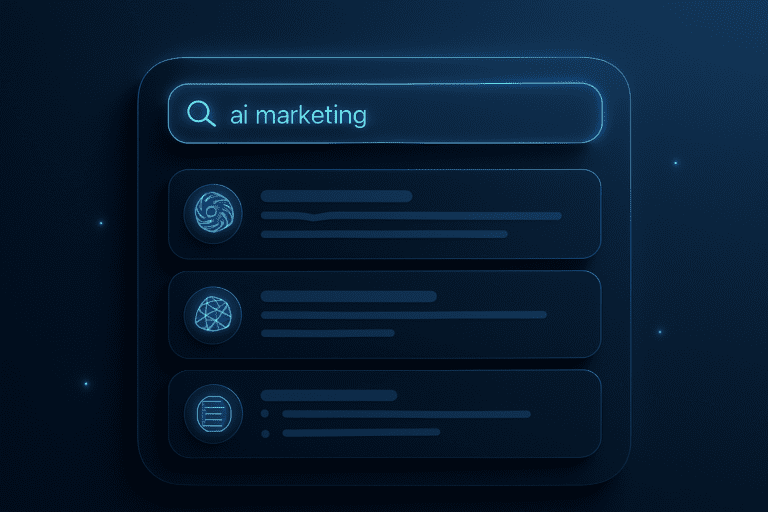
TL;DR: AI optimization (GEO) is about tailoring your content for answers generated by LLM models. The key is content authority and a clear data structure.
AI website optimization – a new, rapidly growing field that combines classic SEO with AI-driven SEO (meaning optimization for AI-based systems and models like Google SGE, ChatGPT, Perplexity, or Gemini).
Below, I break down a step-by-step strategy on how to effectively rank your website in the age of AI today 👇
🧠 1. Understand the new search ecosystem
AI is changing how people look for information:
- Google SGE (Search Generative Experience) generates AI answers instead of classic lists of links.
- ChatGPT (with plugins / browsing), Perplexity, You.com, and other AI models are becoming alternative search engines.
- Content that AI can easily understand, summarize, and cite gains an advantage.
👉 That’s why today we optimize not only „for Google”, but also for language models (LLMs).
⚙️ 2. Optimize content for „AI reading”
Instead of classic „keyword stuffing”, focus on making your content:
- semantically rich (answering specific user questions),
- well-structured (H2–H3 headings, lists, tables, FAQ),
- easy to cite by AI (short, clear paragraphs).
📌 Pro tip: AI is more likely to cite snippets that sound like definitions or direct answers, e.g.
„AI website optimization is the process of adjusting content and site structure to match generative search algorithms and language models.”
🔍 3. Use structured data (Schema.org)
Thanks to schema markup:
- Google and AI can more easily understand who you are and what you offer,
- you increase your chances for rich snippets and AI citations.
The most important data types:
- Organization and LocalBusiness
- Article, Product, Review
- FAQ and HowTo
✍️ 4. Create content for humans, but in the language of machines
Use natural language, but pay attention to:
- contextual keywords (e.g., „AI SEO”, „ChatGPT optimization”, „generative search”),
- user intent (informational, transactional, navigational),
- synonyms and related concepts – LLMs understand semantics, not just phrases.
🧩 5. Build expert authority (E-E-A-T)
Google and AI prefer content with a high level of Experience, Expertise, Authoritativeness, Trustworthiness:
- Add an author bio, certificates, and data sources.
- Build web citations and links from authoritative domains.
- Publish case studies, reports, analyses – AI „likes” them and cites them.
🚀 6. Optimize for „AI Discovery”
This is a new branch of SEO – it’s all about making sure AI can find, understand, and use your content:
- Take care of loading speed (Core Web Vitals),
- Indexability (robots.txt, sitemap, canonicals),
- AI visibility – test whether your content appears in ChatGPT, Perplexity, etc. responses.
🧰 7. Leverage AI tools in SEO
Modern SEO without AI is a thing of the past.
It’s worth using:
- Surfer SEO / NeuronWriter / MarketMuse – for semantic analysis,
- ChatGPT / Claude / Gemini – for research and generating content outlines,
- Ahrefs / Semrush / SEOcrawl – for backlink and visibility analysis,
- Frase / Content at Scale – for content briefs and AI optimization.
📊 8. Measure success differently
AI optimization is not just about rankings in Google:
- Check for mentions of your brand in AI search engines,
- Analyze „AI citations” – whether models are citing your content,
- Monitor traffic from AI-based tools (Perplexity, ChatGPT Search).
CHEERS! And have fun rolling out your plan 😎
FAQ – AI Optimization
How does GEO differ from SEO? SEO targets link rankings, while GEO targets being part of the answer generated by AI.


![[eBook] Marketing 360 — From Fundamentals to Advanced Strategy by Mariusz Brandt](https://mariuszbrandt.pl/wp-content/uploads/2025/04/okladka_Marketing360_MariuszBrandt.jpg)