TL;DR: Family businesses require a specific approach to innovation that combines tradition with modern technologies. The key is planned succession and process digitization.
Growth strategy for family businesses and solving the “problems” of family enterprises.
Introduction: Mission and Rationale of the Program
Polish family businesses are a key element of the national economy, distinguished not only by stability, but above all by unique assets that are difficult for other types of enterprises to replicate. Their strength lies in a long-term perspective, often extending beyond a single business cycle or a CEO’s term.
They are characterized by a high rate of reinvesting profits into development, which helps build potential for years to come. The most valuable, yet least measurable capital of these enterprises is “trust capital”, which is built on the foundation of long-term relationships with employees, customers, and business partners.
This approach, based on responsibility and generational thinking, allows them to successfully compete even with large corporations.
The proposed program aims to create a comprehensive support ecosystem that will not only distinguish and reward these companies for their past achievements, but also allow them to fully utilize their innate advantages while adapting to the challenges of the modern market.
The key mission of the program is to synthesize the traditional values that are the foundation of their success with innovative tools such as artificial intelligence, modern digital marketing, and the sharing economy model. This program aims to transform the innate longevity of family businesses into a competitive advantage on a local, national, and even international scale.
I. Situational Analysis: Diagnosis of Needs and Challenges
Family businesses, despite their unquestionable assets, struggle with a number of specific problems that constitute a barrier to their further growth and expansion. Understanding these challenges is fundamental to creating an effective support program.
Succession problems
The succession process, i.e., transferring control of the enterprise to the next generation, appears to be one of the greatest challenges for family businesses. Research indicates that as many as 64% of respondents will take over management in the company without a formal succession plan.
However, this statistic is just the tip of the iceberg, as the problem goes far beyond legal or financial issues.
- Psychological and relational barriers: The deepest source of difficulty in succession is not a lack of legal or financial knowledge, but psychological and cultural resistance. Founders, often called patriarchs or founders, accustomed to a “single-person management model,” naturally struggle to hand over control, creating an organizational and cultural barrier. On the other hand, the younger generation may fear immense responsibility and potential parental disappointment. This unspoken dynamic leads to mounting generational conflicts. As analyses show, feuding families can ruin enterprise growth, and bringing private conflicts into the professional sphere negatively affects the work atmosphere and the successor’s authority among non-family employees.
This means that the support program must go beyond simple technical consulting and include mediation and psychological support to build a lasting bridge between the visions and goals of the generations.
Managerial and technological challenges
Apart from succession, family businesses often encounter outdated management models that hinder their growth. Typical barriers include: lack of a formal strategy, excessive focus on day-to-day operations, inability to compete effectively, and imprecise definition of the target group.
- Culture of resistance to innovation: Strategic and marketing problems are not accidental. They are a direct consequence of single-person leadership, which becomes a bottleneck for innovation and proactive growth. A lack of funds to hire specialists, combined with the belief that marketing and new technology analysis are unnecessary, puts companies on the defensive in the market. Such an approach—relying on “tried-and-true schemes” and assumptions rather than data and analytics—threatens collapse in the face of dynamic changes.
Therefore, providing companies with “know-how” must go hand in hand with a change in mindset. The program should help entrepreneurs understand that modern technologies and marketing strategies are not merely an optional addition, but an integral element of survival and building a long-term competitive advantage.
Table 1.1: Matrix of Problems and Proposed Solutions
The table below serves as a strategic roadmap visualizing the identified challenges and showing how each will be addressed by individual program modules.
| Challenges | Proposed Solutions | Sources |
| Succession problems (lack of plan, generational conflicts) | Succession Support Module (legal, financial, psychological consulting) | 6 |
| Managerial barriers (single-person leadership) | Training in modern management methods and techniques | 7 |
| Strategic gaps (lack of strategy, untapped marketing potential) | Intelligent Digital Transformation Module (marketing, AI implementation) | 4 |
| Limited access to technology (lack of investment funds) | Innovative Resource Sharing Model Module (3D platform) | 5 |
| Difficulties in navigating the public support system | The role of local government as a “navigator” and central information point | 9 |
II. Program Pillar: Synergy of Generations and Innovation
The designed program aims to bridge the generations, combining the “operability and experience” of the older generation with the “digitization, modern marketing, and data-driven management” of the younger one.
This strategic approach will allow traditional businesses to be transformed into innovative market leaders in their niches, which is a key pillar of success.
The proposed program is a holistic offering consisting of three complementary modules:
- Module 1: Intelligent Digital Transformation
- Module 2: Innovative Production Resource Sharing Model
- Module 3: Succession Support and Human Capital Development
III. Program Value Modules: Detailed Service Description
Module 1: Intelligent Digital Transformation
Implementing artificial intelligence and modern digital marketing in family businesses is not only an opportunity for optimization, but also for gaining a competitive edge.
- Implementing AI in operational processes, accounting, and marketing: Artificial intelligence will act as an intelligent assistant, automating repetitive, tedious tasks such as sorting emails in the inbox, creating spreadsheets, or generating drafts of texts, e.g., for emails or social media posts. The goal of implementing these solutions is to free up time for entrepreneurs and their employees to focus on key, strategic tasks that require creativity and personal involvement. In this way, AI becomes a tool to boost overall operational efficiency, rather than just an additional technology.
- Digital marketing strategies: For family businesses, digital marketing is not just another sales channel. It is a tool to scale their inherent authenticity and trust capital. The program will support companies in using storytelling to present family history, multigenerational experience, and values on social media. This approach, based on transparency and building personal relationships with customers, helps build an engaged online community. These activities include creating attractive visual content (photos, short videos), running advice blogs, organizing webinars, and optimizing for local SEO and paid Google Ads campaigns.
This way, family businesses can reach younger generations of customers without losing their unique, traditional identity.
Module 2: Innovative Production Resource Sharing Model
- Sharing economy concept for SMEs: The program will introduce a model based on the sharing economy, whose core idea is access to expensive resources without the need to own them. Such a solution is particularly beneficial for companies that need specific equipment (e.g., a specialized 3D printer) only occasionally, as it helps minimize fixed costs and limit equipment maintenance expenses. This model responds to changing cultural attitudes where renting becomes an attractive alternative to ownership.
- Platform connecting companies with freelancers and hobbyists:
service brokering and providing services in two categories:- Connection with hobbyists: for simple prototypes and low-budget orders where material quality is not critical.
- Intermediation in access to professional services: for more demanding projects requiring advanced 3D printing technologies, such as MJF (Multi Jet Fusion) or SLS (Selective Laser Sintering), as well as comprehensive post-processing. Acting as an intermediary, the program will verify service quality and connect companies with professional suppliers, such as Technology Applied, a strategic partner of the 3D Printing Center portal. This strategic approach increases the program’s value and makes it a real solution for thriving businesses aiming to drive innovation.
Module 3: Succession Support and Human Capital Development
Comprehensive consulting in the succession process is crucial to ensure the company’s longevity. Following proven models, the program will provide support in four key dimensions:
- Organizational dimension: Advisor support will help analyze the company’s overall situation (finances, market, processes) and verify its current vision, mission, and strategy.
- Legal and financial dimension: The program will provide assistance in designing succession from a legal and financial perspective, including asset protection, tax optimization, and planning share distribution.
- Psychological dimension: A key element is support in mediation and resolving conflicts between generations. The goal is to show how to reconcile tradition with a new development vision and how to build business relationships while maintaining family bonds. Support for the successor in building authority within the team is also essential.
IV. Program Infrastructure: Public-Private Partnership
The role of local government in providing know-how and supporting expansion
An analysis of available support programs indicates that the public funding system (PARP, regional funds) is often complex and fragmented, creating a barrier to entry for small and medium-sized enterprises. The role of local government should not be to create further bureaucratic structures, but to establish a centralized, easily accessible information and expert point that will act as a navigator through the maze of existing subsidies.
A local entity, such as the Orbital Center, can become a partner in this process, providing practical financial and training support. This approach is more effective and feasible than creating a new, separate institution.
Interpretation and role of the “Orbital Center for Entrepreneurship Support”
The name “Orbital Center for Entrepreneurship Support,” mentioned in the inquiry, should be viewed not as a physical institution, but as a strategic umbrella concept for the entire program.
The proposed program is the first tangible “orbit” of this Center—a central point coordinating a network of various services and partners “orbiting” around it. This cohesive approach allows the name to be used as an element of branding and narrative that perfectly fits a model combining distributed resources (advisors, brokers, local agencies) into a single, synergistic system.
V. Benefit Estimation and Success Indicators (KPIs)
Implementing the program in the described form will bring a number of tangible and intangible benefits for family businesses.
- Increased competitiveness: Process optimization through AI, access to modern technologies, and effectively reaching new customers via digital marketing will allow companies to move away from a defensive market strategy and proactively build their position.
- Cost reduction: Implementing automation tools and utilizing the sharing economy model will translate into operational savings that can be reinvested in further development, e.g., broader-reach advertising.
- Smooth succession: Comprehensive support in the succession process will reduce the risk of company failure resulting from unprepared generational change, thereby securing the legacy of many years of hard work.
Table 5.1: Estimation of Benefits of the Integrated Program
| Support Module | Key Activities | Expected Benefits | Potential KPIs |
| Intelligent Digital Transformation | Automation of administrative processes using AI | Reduction of working time on administrative tasks, increased data accuracy | Automation rate, % error reduction, time saved on administrative tasks |
| Implementation of content marketing and SEO strategy | Increased brand reach, building an engaged community, acquiring new customers from younger generations | Increase in website traffic, conversion rate, marketing campaign ROI | |
| Innovative Resource Sharing Model | Access to professional on-demand 3D printing services | Reduced capital expenditures on equipment, faster prototyping and implementation of new products | % reduction in prototype production costs, innovation index, time to market |
| Succession Support and Human Capital Development | Psychological and legal consulting in the succession process | Reduction of family conflicts, smooth handover of management, safeguarding company assets | % of companies that successfully completed the succession process, founder and successor satisfaction index, business continuity after succession |
VI. Summary and Implementation Recommendations
The proposed program creates unique value by addressing the holistic needs of family businesses. It combines strategic consulting with innovative resources and public support, ultimately driving lasting growth and safeguarding generational heritage. Instead of offering fragmented solutions, the program builds a cohesive ecosystem where every service reinforces the rest.
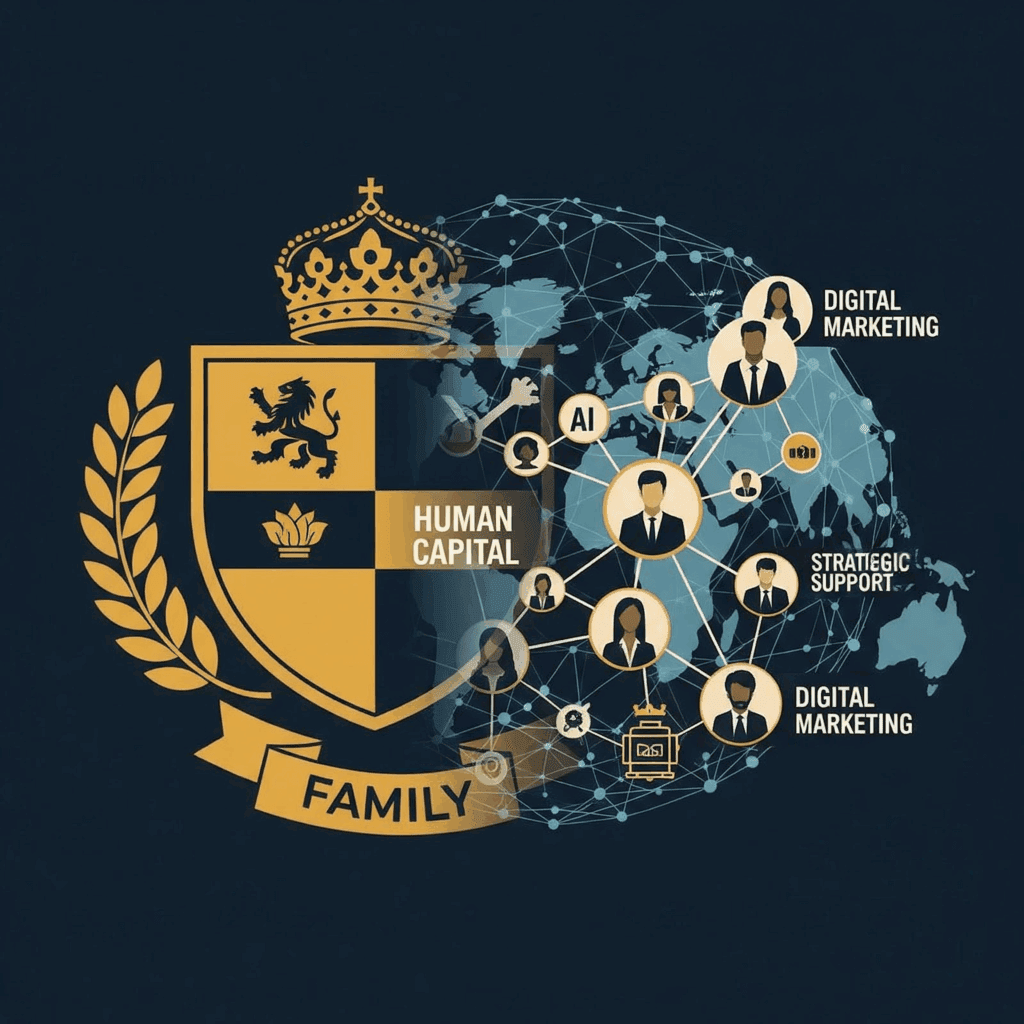
Comprehensive support for family businesses. Strategy by Mariusz Brandt 👍
My 20 years of experience in innovation marketing and startup development allow me to look at your challenges from a unique perspective. I understand that family businesses are the backbone of the economy, combining stability with capital built on trust and a long-term vision. I also know that you face specific issues – from succession and outdated management models to limited access to the latest technologies.
Based on an analysis of your needs, I have prepared a concrete support offer designed to turn these challenges into a competitive advantage. My services are scalable and tailored to individual needs – ranging from ad-hoc consultations to comprehensive strategies.
What do I offer?
1. Ad-hoc consultations and strategic diagnosis:
- Quick analysis: We will identify key bottlenecks in your company – whether in succession, management, or marketing.
- Initial recommendations: You will receive specific tips on immediate actions that can improve efficiency.
- Workshop sessions: Team sessions to help recognize barriers and work out initial solutions.
2. Artificial Intelligence (AI) implementation for more efficient work:
- Process automation: We will implement AI solutions to automate repetitive and time-consuming administrative and accounting tasks, as well as the early stages of content creation.
- Operational optimization: AI will become your smart assistant, freeing up time and resources for strategic decisions and innovation.
- AI training: Employees will learn how to use AI tools in their daily work, boosting overall productivity.
3. Intelligent digital transformation and modern marketing:
- Content marketing and SEO strategies: We will develop and implement strategies that leverage your unique story and trust capital to build an engaged online community and acquire new customers, especially from younger generations.
- Storytelling: We will show you how to effectively tell the story of your company, your multi-generational experience, and your values on social media.
- Google Ads campaigns and local SEO: We will ensure visibility in search engines and reach to your target audiences.
- Creating engaging content: Support in producing visual materials (photos, videos) and text content (blogs, guides).
4. Comprehensive marketing strategy and market communication:
- Audit and strategy redesign: We will create from scratch or optimize your existing marketing strategy, taking into account the specifics of your family business and current market trends.
- Brand management and PR: We will develop a cohesive brand narrative and communication plan to strengthen your company’s image and build its authority.
- Entering new markets: Preparing expansion strategies – local, national, and international – using modern digital tools.
- Integrating online and offline efforts: Ensuring consistency of communication across all channels.
My experience, focused on innovation and dynamic growth, combined with a deep understanding of the unique values of family businesses, is the ideal combination to help you transition from tradition to global innovation.
Feel free to contact me to discuss the details and tailor the offer to your individual needs.
FAQ – Family Businesses
How to introduce innovations in a family business? You should start by educating successors and gradually implementing AI tools that support rather than replace traditional values.


![[eBook] Marketing 360 — From Fundamentals to Advanced Strategy by Mariusz Brandt](https://mariuszbrandt.pl/wp-content/uploads/2025/04/okladka_Marketing360_MariuszBrandt.jpg)